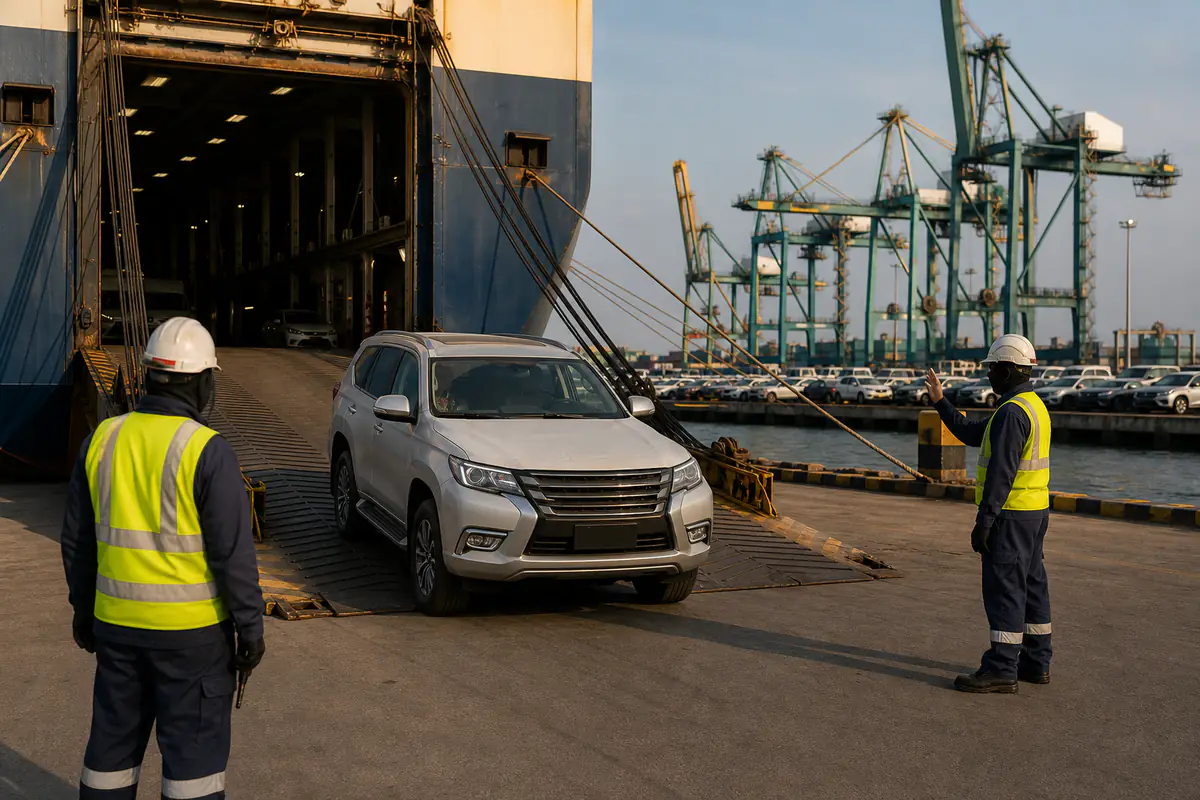
Understand the shipping method / RORO
RORO describes vehicle movement—not a promise for every route.
Roll-on/roll-off generally means a vehicle is driven on and off a vessel. Actual availability still depends on the route, vessel and booking acceptance.TERMINAL RUNBOOK / 01
Three controls before movement.
The direction is useful for planning; the booking is what authorises a terminal handover.
- 01
Confirm unit suitability
Dimensions, running condition and vehicle type need review before a method is selected.
- 02
Understand terminal handover
RORO does not automatically mean door-to-door. The handover and collection points must be stated.
- 03
Avoid schedule assumptions
Schedules change. Use dates only after current operational confirmation.
LOAD READINESS / 02
Bring facts, not assumptions.
These details let the route desk test vehicle and terminal suitability.
- 01Vehicle starts and movesCHECK
- 02Leaks or damage are disclosedCHECK
- 03Ownership documents are availableCHECK
- 04Loose accessories are removedCHECK
- 05Fuel and personal-item policies are confirmedCHECK
OPERATING QUESTIONS / 03
Questions that change the handover.
01Is RORO available on every route?+
Not necessarily. Availability must be checked against the terminal, vessel and current booking.
02Can a motorcycle use RORO?+
That depends on the operator acceptance and handling method for the route.
03Is RORO the same as a container?+
No. They are different operating methods; suitability depends on the unit and route.
ROUTE CHECK / WHATSAPP